

What It Means to Win
Every team wants to win.
In sports, that usually means the same thing to everyone watching. There’s a season, a playoff, a championship. Only two teams make it to the final game. Only one walks away with the trophy.
- They’re all playing the same game.
- They’re all following the same rules.
And yet, only one outcome gets labeled “winning.”
That simplicity is part of what makes sports easy to talk about… it’s also what makes business harder.
Playing the Same Game
In organizations, we often borrow the language of competition without questioning the assumptions underneath it.
We talk about:
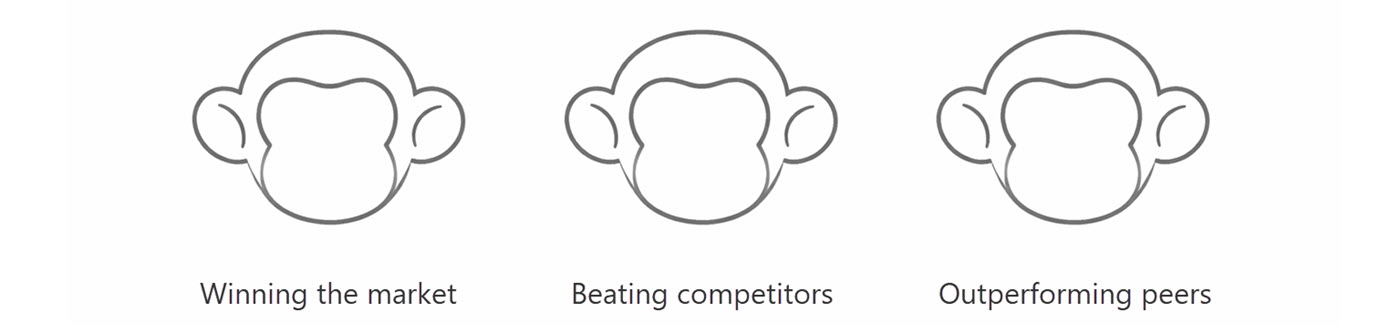
The implication is clear: everyone is chasing the same prize.
When you look more closely, that’s rarely true.
Orgs may share an industry, a customer base, or a set of constraints. On paper, they’re playing the same game. In practice, they’re often optimizing for very different things.
Different Scoreboards, Same Field
The field may be shared. But what leaders choose to aim for can vary dramatically.

From the outside, their numbers can look contradictory.
- One “wins” on top-line revenue.
- Another “wins” on retention.
Same field. Same season… Different internal scorecards. And that’s where people start talking past each other. We start debating about outcomes without ever asking what each team was actually trying to optimize for.
When Outcomes Are Misread
This is where many conclusions go sideways.
- We see a result and assume intent.
- We see a metric and assume meaning.
- We see a winner and assume superiority.
But outcomes don’t explain strategy on their own. They reflect prioritization.
Two competitors can both succeed by their own definitions while producing very different results. That doesn’t mean one played better. It means they played differently.
Winning as a Choice
What gets lost in most conversations about performance is that “winning” is rarely a neutral concept.
- It’s defined.
- It’s chosen.
- And it’s reinforced by what we measure.
Once a definition of winning is set, behavior follows. Tradeoffs are accepted. Certain paths are taken off the table. That doesn’t make the choice wrong.
It does make it consequential.
A reframe to hang with
Instead of asking:
- Who won?
- Who lost?
There’s a more revealing question underneath:
What did each team decide was worth winning?
Because if two teams both achieved what they set out to do, the scoreboard may be telling only part of the story.
And sometimes, the most important differences aren’t in how the game is played — but in how victory is defined.
Continue the publishing sequence
Once we've decided what winning looks like, the next challenge is knowing whether we're actually measuring it.